——————–
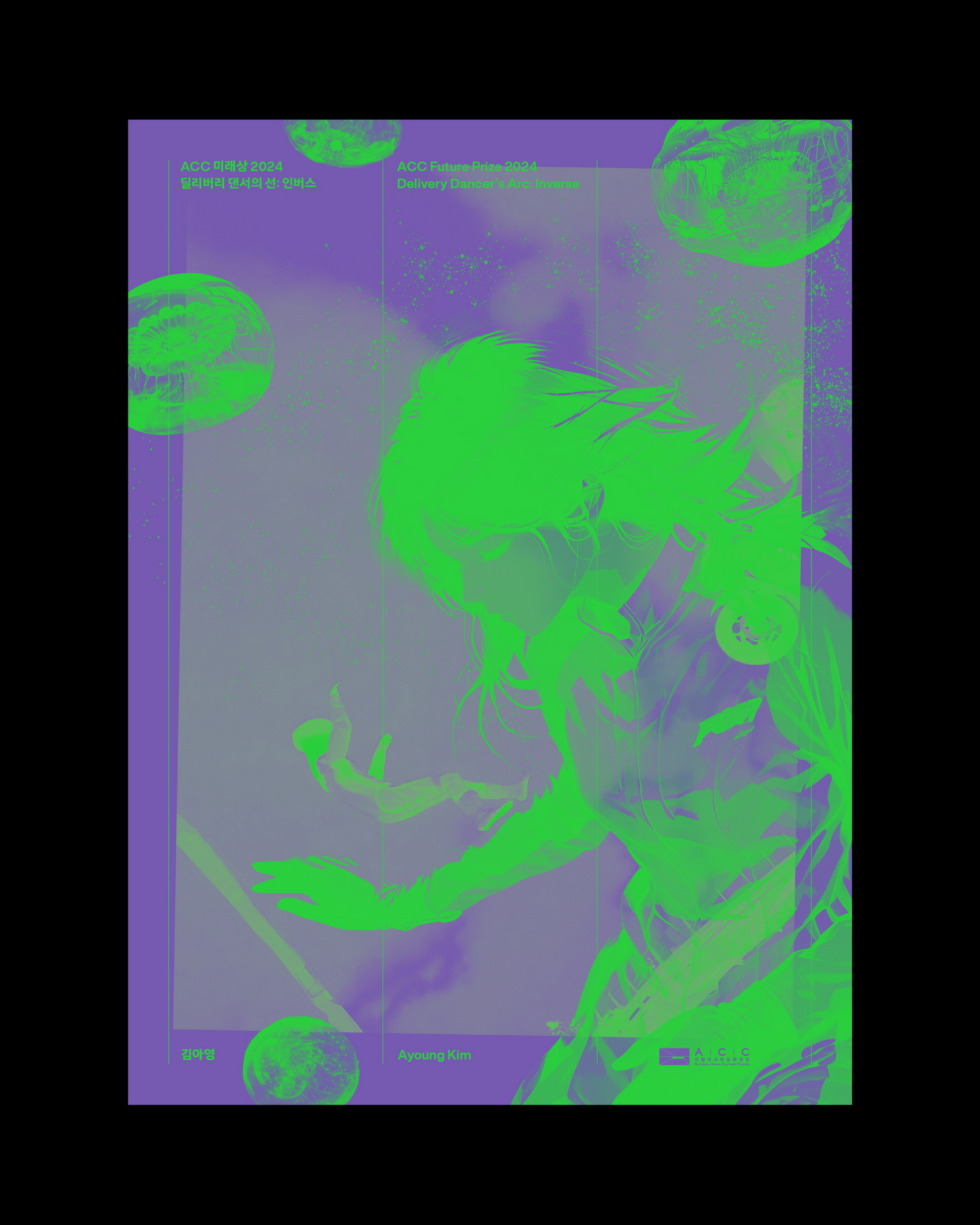
Delivery Dancer’s Arc: Inverse
Language: Korean, English
Publisher: The National Asian Culture Center
First Edition: October 29, 2025
Pages: 228 pages, paperback, color images, 150, 180 x 245cm
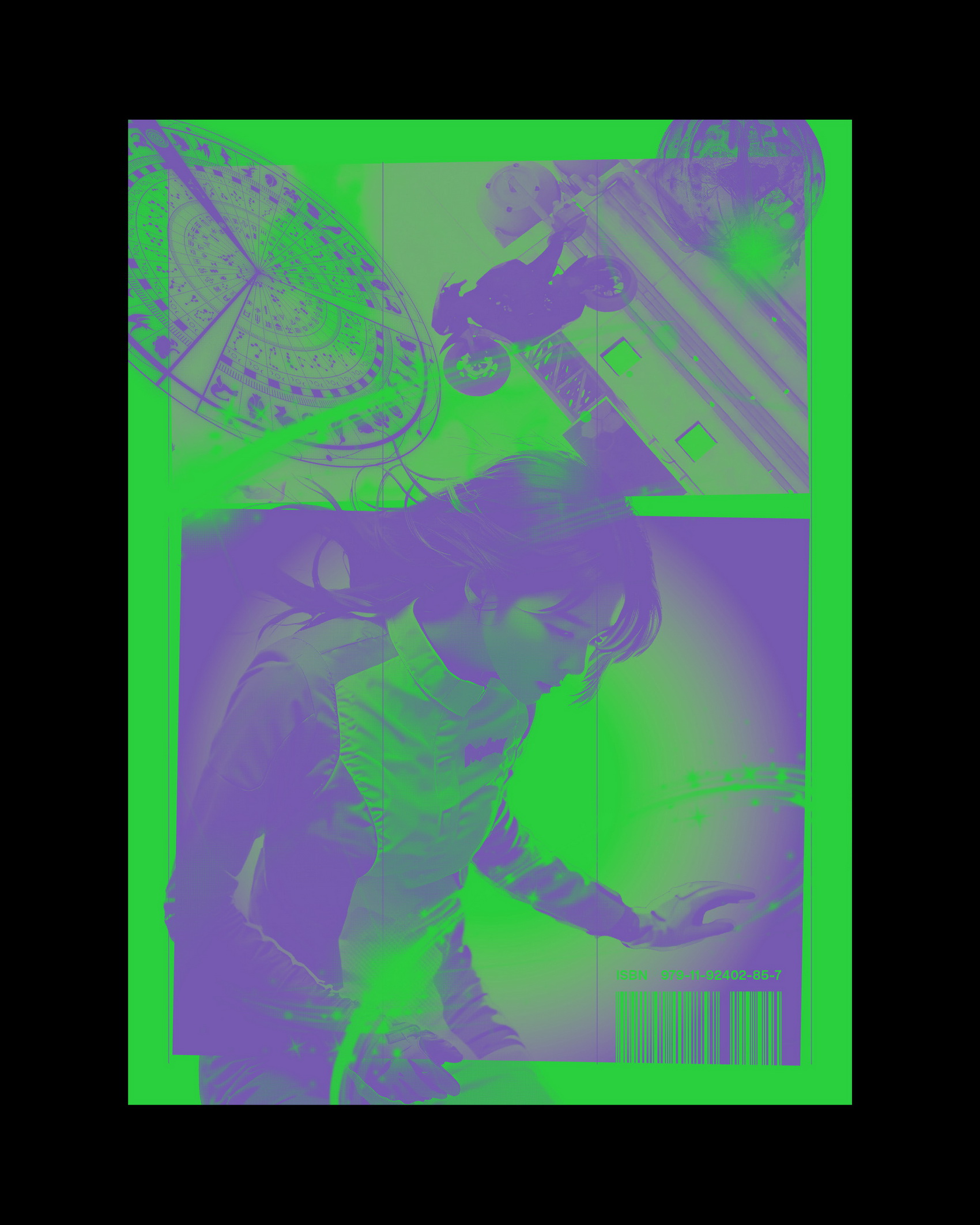
ISBN: 979-11-92402-85-7 (93600)
Editor: Sooyoung Leam, Hyemi Oh
Editorial Coordination: Sarah Goddard
Translation: Maya West
Design: Sam Kim
Photography: Cheolki Hong, Sunwoo Kim, Taehwan Park
Photo Retouching: Cheolki Hong, Ayoung Kim, Siyeon Kim
Contents
1. Foreword – Sangug Kim
2. Endorsement – Philip Ziegler
3. Codes to Decipher the Future: ACC Future Prize 2024: Ayoung Kim – Hyemi Oh
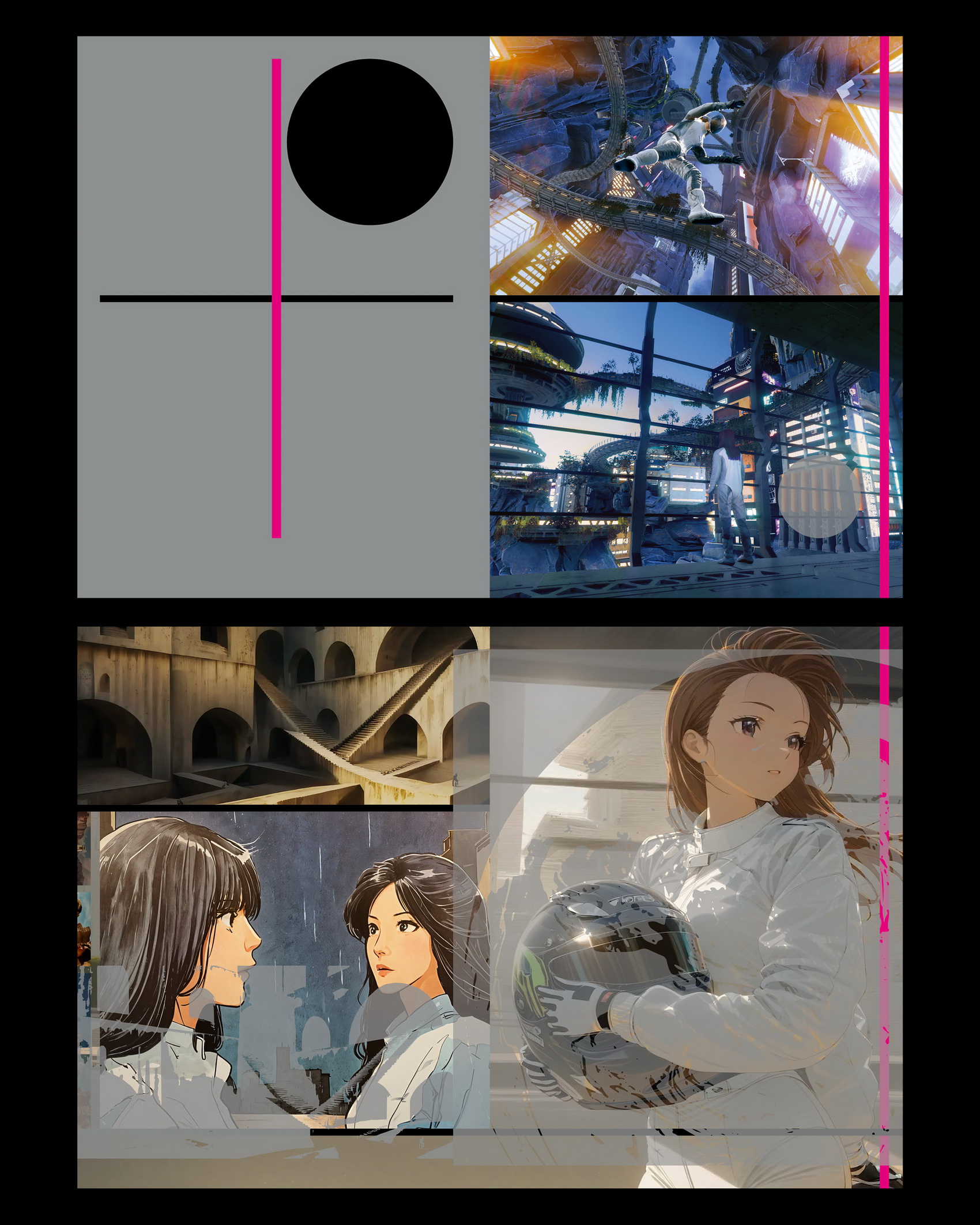
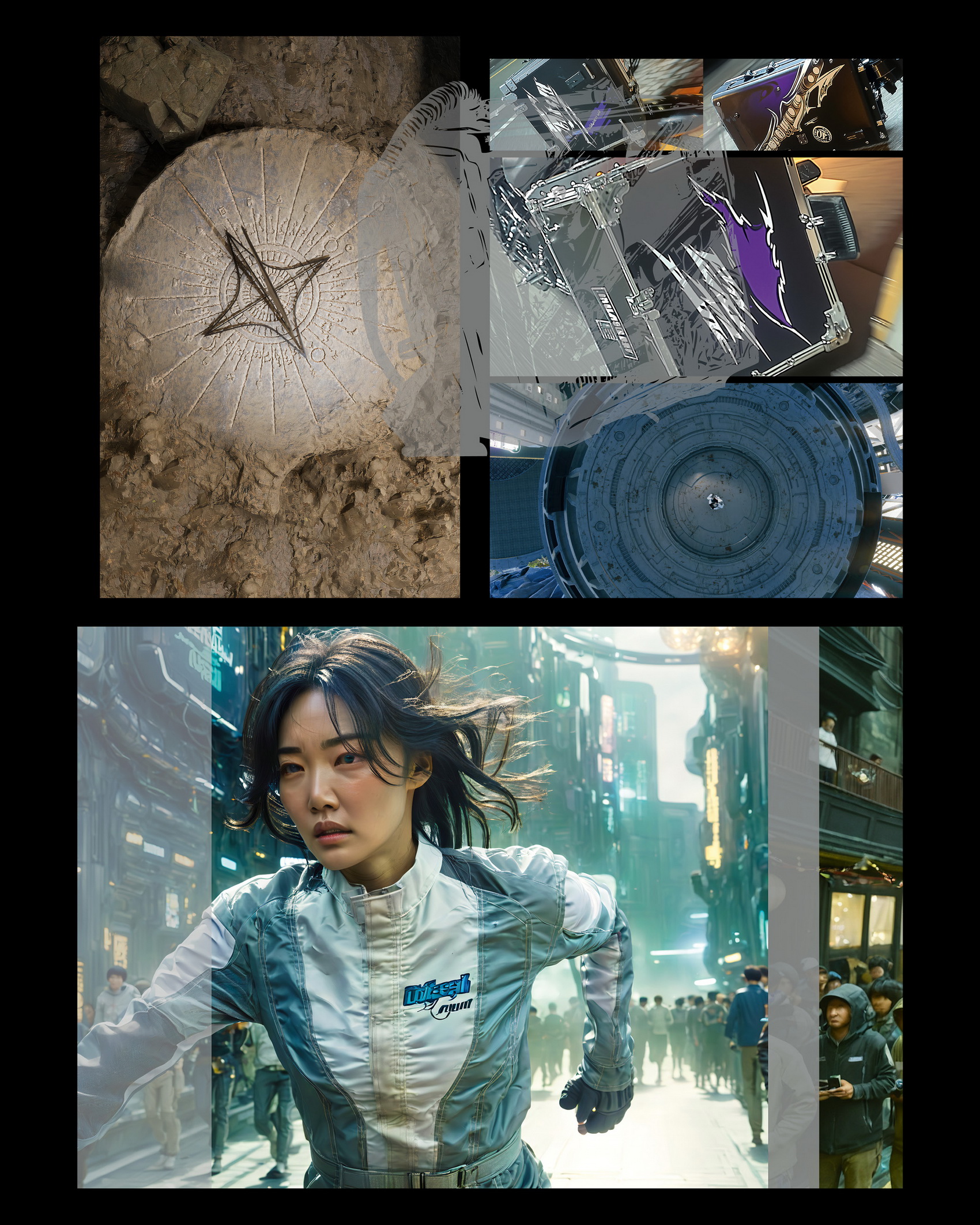
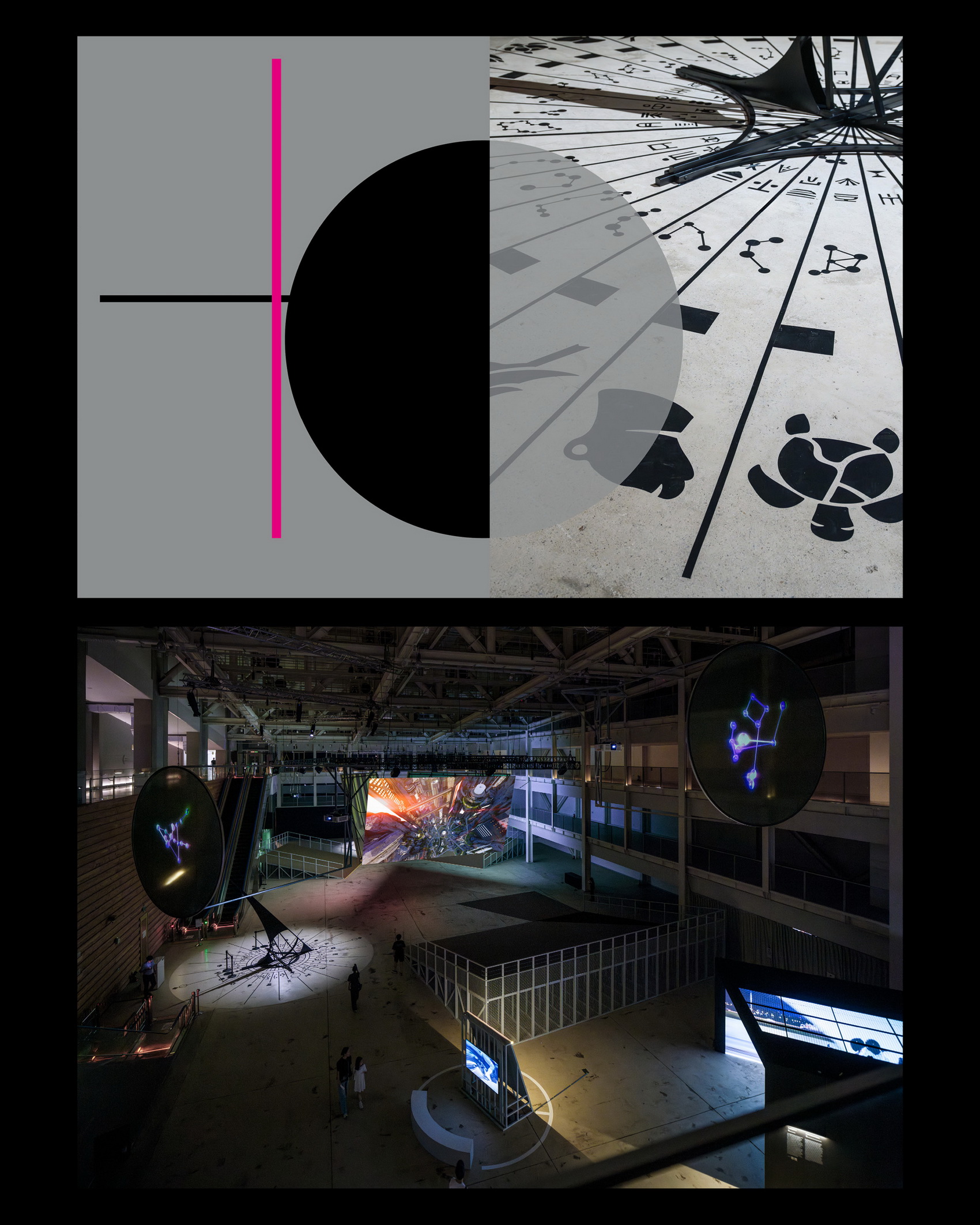
4. Plates
5. Ari Larissa Heinrich in Conversation with Ayoung Kim
6. Can Delivery Dancers Shape That Which Shapes Them? Two Postulations on the Delivery Dancer’s Free Fall Attempts – Zian Chen
7. A Time Without an Image – Nora O’ Murchú
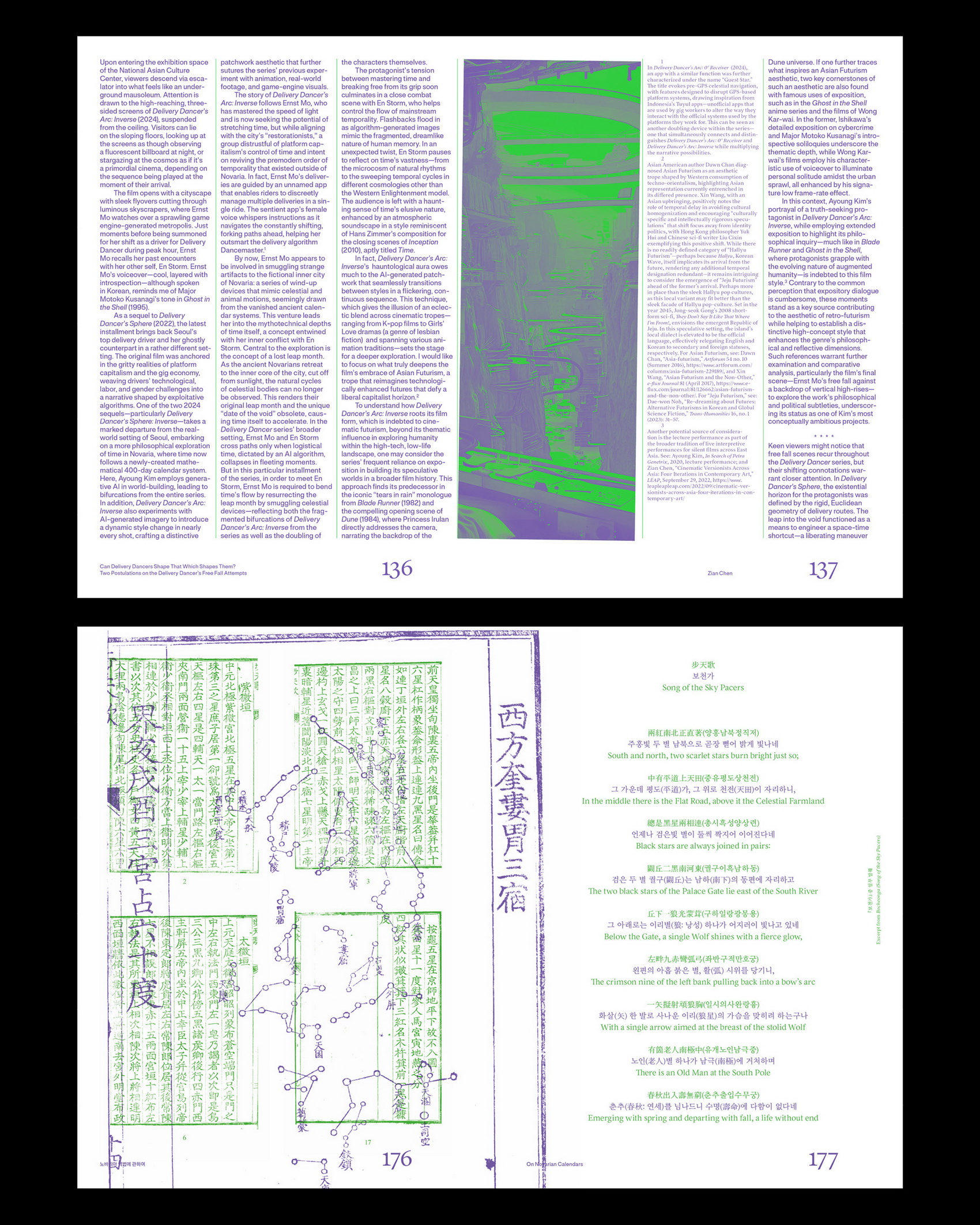
8. On Novarian Calendars
9. Roundtable: Ghost Nannies or City Planners? – Production Team
10. Side-eye Collisions: Navigational Pulls of the Spiritual Kind – Jenna Rain Warwick
11. Imagining Different Movements: Speed, Constellations, Bodies – Haeju Kim
Authors
Zian Chen is currently a contributing editor for Ocula magazine and a founding editor of Pailang Journal. His collaborative research and curatorial projects realized with other practitioners have been presented at institutions such as the Rockbund Art Museum, Shanghai; Power Station of Art, Shanghai; Ming Contemporary Art Museum, Shanghai; Times Museum, Guangzhou; Nida Art Colony, Lithuania, and the Bleed Biennial in Melbourne, among others. He has contributed to exhibition catalogues for artists such as Elmgreen & Dragset, Ho Rui An, Wang Tuo, and institutions including the Arrow Factory, Beijing, Liverpool Biennial, and Asian Art Biennial, Taichung, among others.
Ari Larissa Heinrich writes about transnational visual cultures, with emphases on the origins of anti-Chinese racism, on medical representations of the body, and on the use of biological materials in art. Ari has also translated key works of queer literature from Taiwan and contributed to queer Sinophone studies. They received a Master’s degree from Harvard University and a PhD from the University of California, Berkeley, and have been supported by grants from the Fulbright-Hays Program, the Australian Research Council (ARC Future Fellowship), the Andy Warhol Foundation Arts Writers Grant, and others. Ari has lectured on topics ranging from the history of anatomical illustration to the economics of race and racism behind popular exhibitions of Chinese cadavers in internationally circulating anatomical displays. Currently Ari is working on a book about the pigment melanin in the art of Jes Fan, and is co-editor of a recent special issue of Screen Bodies: The Journal of Embodiment, Media Arts, and Technology. Ari is Professor of Chinese Literature and Media at the Australian National University and a Fellow of the Australian Academy of the Humanities.
Haeju Kim is a Senior Curator at Singapore Art Museum (SAM) who focuses on contemporary art practices in Singapore, Southeast Asia, and Asia. Previously the Deputy Director at Art Sonje Center, Kim holds deep experience in curating numerous contemporary art exhibitions and performance programs across various disciplines. Her curatorial approach emphasizes the consideration of the body, time and memory as key elements, while also engaging with topics including ecological perspectives, locality and its planetary connection, and questions of coexistence through her research. She was the Curator of the Singapore Pavilion at the 60th International Art Exhibition of La Biennale di Venezia, and the Artistic Director for Busan Biennale 2022. Other exhibitions curated by Kim include two solo exhibitions by Shitamichi Motoyuki (A Ship Went Up That Hill, 2022) and Manon de Boer (Down Time, 2022) at Kunsthal Aarhus, Denmark, as well as Moving/Image, a three-chapter exhibition and performance program that was presented at Seoul Art Space Mullae (2016), ARKO Art Center (2017) and Seoul Museum of Art (2020).
Nora O’ Murchú is a curator and researcher whose work explores how digital infrastructures—software, algorithms, and networks—reshape contemporary culture and politics. Drawing on queer-feminist and postcapitalist theory, her projects examine how technologies can reinforce extractivist and authoritarian systems, while also revealing cracks for collective action and dissent. She has curated exhibitions, residencies, and public programmes at Akademie Schloss Solitude, LABoral, and the Seoul Museum of Art, and served as Artistic Director of transmediale—Europe’s leading festival for art and digital culture—from 2020 to 2024. Her practice questions the boundaries between art and technology, asking how we might reclaim space for agency and collaboration amid the accelerating reconfigurations of techno-social life and the illusions of technosolutionism. She is currently a professor in the Department of Computer Science and Information Systems at the University of Limerick, Ireland.
Jenna Rain Warwick is an emerging Artist, Curator and published writer living and working on Wurundjeri and Boon Wurrung Country (Melbourne). Born in Mossman, Queensland, a proud Luritja Woman. Jenna’s writing and video practice interrogates the mechanics of image making as it upholds and shapes ‘Australia’ identity. She has an interest in the financing of early Australian film and TV as it relates to industry and natural resource extraction. She seeks to challenge the notion of objectivity and formal modes of research, seeking effective waves to engage her community. She has written for un Projects, Art and Australia, her video work has been shown at ACMI (Australian Centre for the Moving Image), West Space, Incinerator Gallery, Blak Dot Gallery and Counihan Gallery. Until recently she worked as the First Nations curator at ACMI.
Excerpts from the publication
P. 128
Your work provides a wealth of material for viewers to interpret and debate about. You raise questions, but you don’t insist on a single answer. Personally I know the figures in your work will keep coming back to me. The proximity of violence and sexuality in particular leads me to feel it would be a mistake to assume a lack of emotional complexity in your work (an assumption that I think can be a liability when it comes to interpreting the careful composition of CGI work more generally). Your work isn’t hygienic. It’s messy.
– Excerpt from “Ari Larissa Heinrich in Conversation with Ayoung Kim”
P. 138
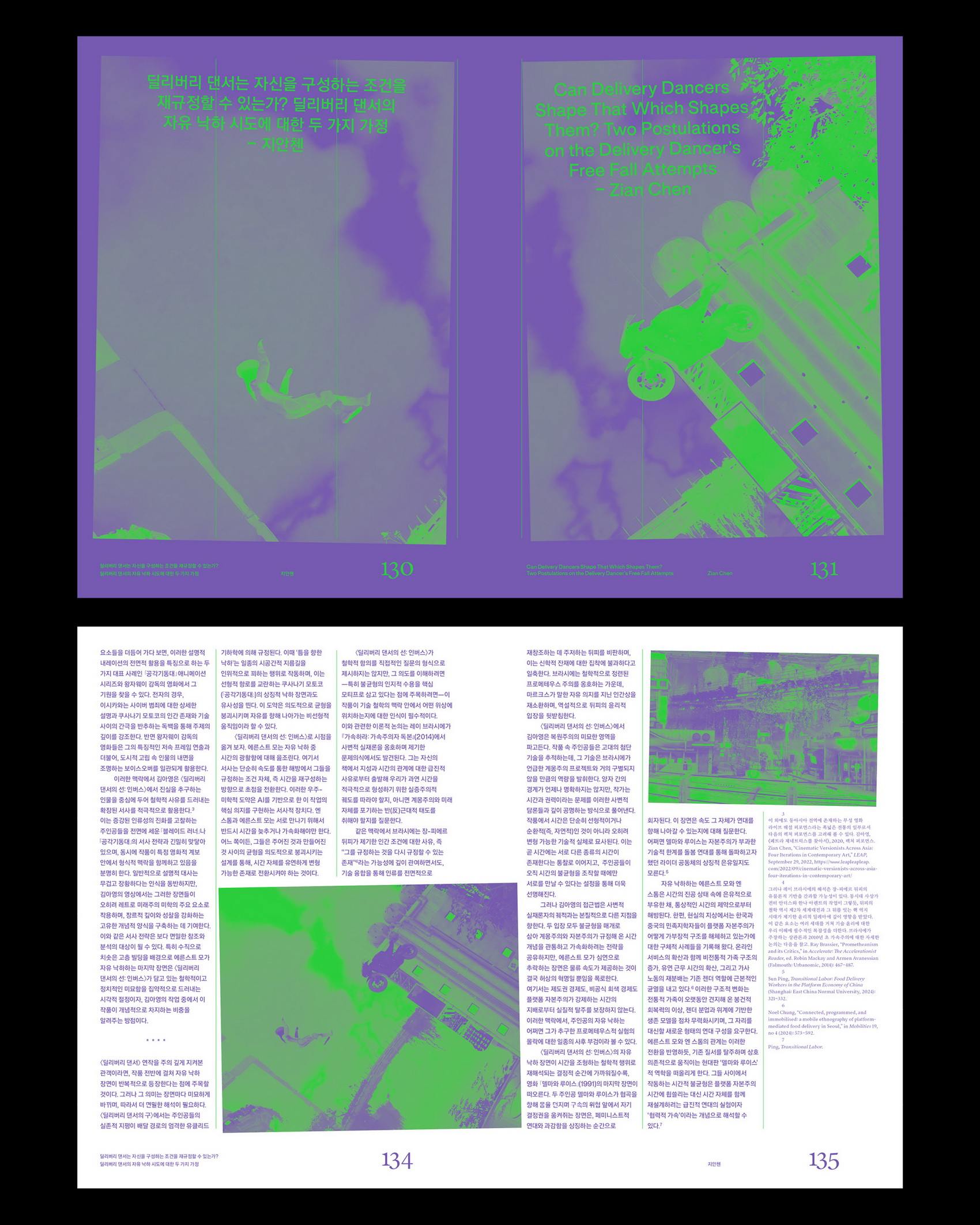
“(…) Ernst Mo’s descent into an abyss reveals a stark reality where logistical speed offers only pseudo-revolutions, and neither formal nor grey economies promise a genuine escape from the temporal domination of platform capitalism. To some extent, the free fall of the protagonist from this context might as well suggest a postmortem of her Promethean experiment’s downfall.”
P. 139
“These shifts erode the traditional, feudal model of family resilience and necessitate the formation of new types of solidarity—perhaps akin to a modern-day Thelma and Louise scenario for Ernst Mo and En Storm, a dynamic that could aptly be described as collaborative acceleration.”
– Excerpt from “Can Delivery Dancers Shape That Which Shapes Them? Two Postulations on the Delivery Dancer’s Free Fall Attempts” by Zian Chen
P. 150
“I have watched Delivery Dancer’s Arc: Inverse on my laptop many times. Yet, to this day, the question of the missing time from the work continues to haunt me. Lying outside the central narrative that unfolds between Ernst Mo and En Storm, it caught and held my attention, compelling me to reflect on the external forces that orient my days. In this latest iteration of the Delivery Dancer series, Ayoung Kim draws us toward fragments of time—fractured by the logics of optimization and commodification—and asks whether these broken realities can be reassembled.”
– Excerpt from “A Time Without an Image” by Nora O’ Murchú
P. 191
“The generative AI team was essentially doing invisible labor. It actually occurred to me that prompt labor is a kind of ghost labor, not unlike that of the Delivery Dancers. To me, AI-generation labor is fundamentally care work: it’s babysitting. AI is like a crying child, and the workers are its nannies, soothing and coaxing, rocking back and forth. That’s why I’m trying out this name, “ghost nannies.” AI actually creates a ton of labor for humans, all while its boundless processing speed shows no regard for the slowness of human cognition.”
– Excerpt from “Roundtable: Ghost Nannies or City Planners?” compiled by the Production Team
P. 204
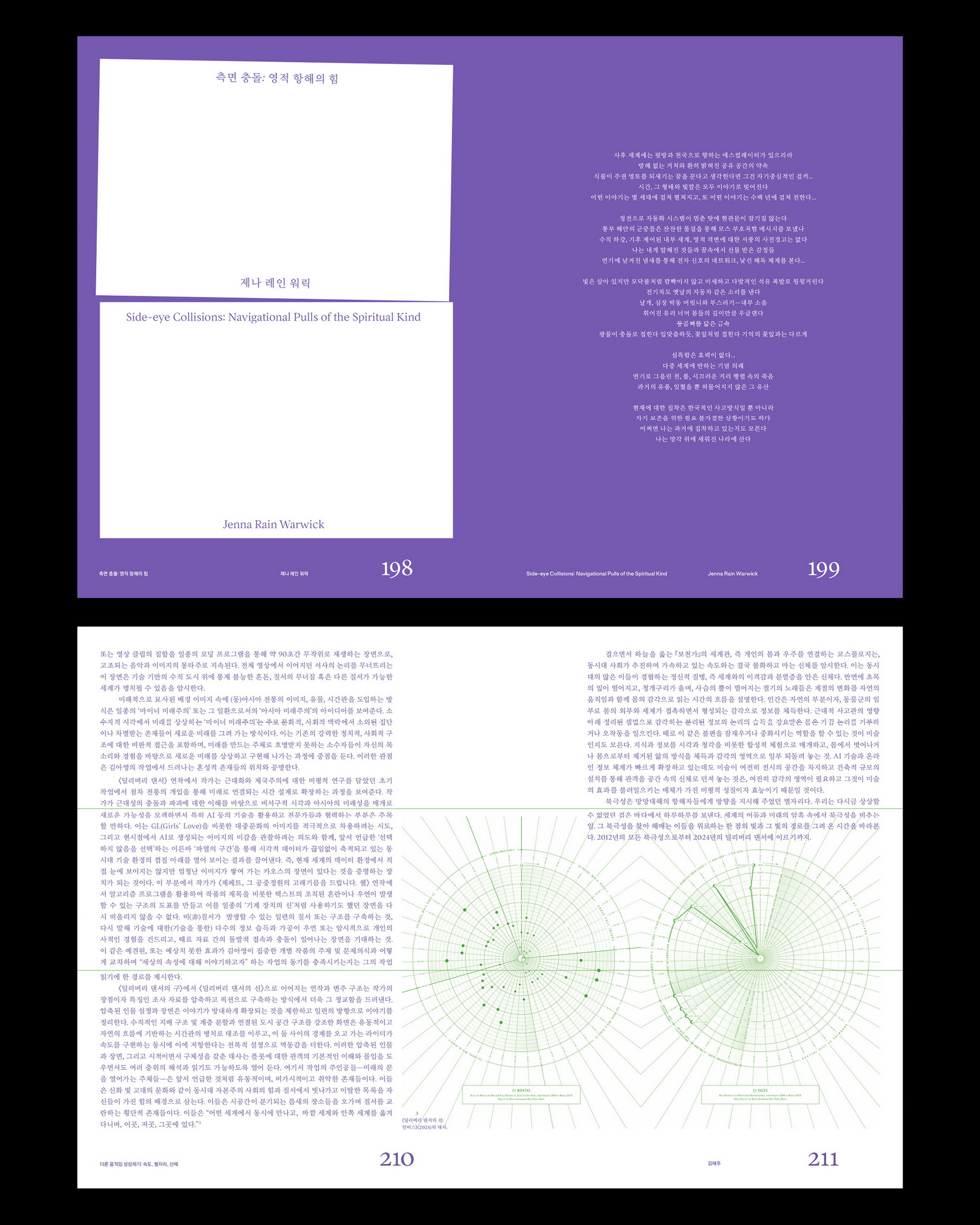
“There is an allure to worlds containing skylines both recognizable and unplaceable, to populations that don’t reckon with historical canon. A tantalizing metamorphosis awaits the protagonist of these worlds, a breaking point induced by the absence of origin. Whilst accelerationism may contextualize the genre Ayoung Kim employs, the ever-present need for care, affection, and understanding of Ernst Mo and En Storm revels against it.”
– Excerpt from “Side-eye Collisions: Navigational Pulls of the Spiritual Kind” by Jenna Rain Warwick
P. 215
“To construct a sequential order or structure open to the possibility of disorder; to anticipate, in other words, scenes in which the mass acquisition and processing of information about (and through) technology may touch upon individual experience, whether by chance or suggestion, sometimes giving way to unpredictable connections and collisions between different pieces of data. Asking how such effects, whether predicted or unforeseen, intersect with the themes and critical questions of each individual piece—not to mention whether they fulfil the artist’s underlying motivation to ‘speak about the nature of the world’—offers one possible way into reading Ayoung Kim’s work”
P. 215
“Here, the protagonists themselves—as agents opening the doors to the future—are, as noted earlier, fluid, invisible, and vulnerable beings. They derive their power from histories and structures that deviate from, or stand outside, contemporary capitalist structures, like myths and ancient cultures. They are transversal figures, moving freely back and forth across interstitial spaces where time and space diverge—agents of disruption who unsettle established systems. “They meet simultaneously in some world, move between the outer and inner worlds, are here, there, and all around.”
– Excerpt from “Imagining Different Movements: Speed, Constellations, Bodies” by Haeju Kim
Online, Offline Shop
National Asian Culture Center Bookshop Dlac: https://accdlacshop.co.kr/product/acc-%EB%AF%B8%EB%9E%98%EC%83%81-2024-%EA%B9%80%EC%95%84%EC%98%81-%EB%94%9C%EB%A6%AC%EB%B2%84%EB%A6%AC-%EB%8C%84%EC%84%9C%EC%9D%98-%EC%84%A0-%EC%9D%B8%EB%B2%84%EC%8A%A4-%EC%A0%84%EC%8B%9C-%EB%8F%84%EB%A1%9D/253
Currently available at the MoMA PS1 Bookstore in New York, USA, and at The Book Society in Seoul, Korea.
ACC 미래상 2024
딜리버리 댄서의 선: 인버스
출판물 언어: 국문, 영문
발행처: 국립아시아문화전당
초판발행: 2025년 10월 29일
출판물 정보: 228쪽, paperback, color images, 150, 180 x 245cm
ISBN: 979-11-92402-85-7 (93600)
편집: 오혜미, 임수영
편집 지원: 사라 고다드
번역: 마야 웨스트
디자인: 김영삼
사진: 김선우, 박태환, 홍철기
사진 보정: 김시연, 김아영, 홍철기
목차
1. 발간사 – 김상욱, 국립아시아문화전당장
2. 추천의 글 – 필립 지글러, ZKM | 카를스루에 예술미디어센터 학예실장
3. 미래를 해독하는 암호들《ACC 미래상 2024: 김아영》 – 오혜미, 국립아시아문화전당 학예연구사
4. 도판
5. 아리 라리사 하인리히와 김아영의 대화 – 아리 라리사 하인리히, 호주국립대학교 교수
6. 딜리버리 댄서는 자신을 구성하는 조건을 재규정할 수 있는가? 딜리버리 댄서의 자유 낙하 시도에 대한 두 가지 가정 – 지안 첸, 작가, 큐레이터
7. 형상이 사라진 시간 – 노라 오 무르쿠, 큐레이터, 미디어 연구자
8. 노바리아 역법에 대하여
9. 대담: 유령 보모 혹은 도시 설계자? – 프로덕션팀 (김서연, 김아영, 김재연, 박건미, 우하정, 윤호준, 최희윤, 허상훈)
10. 측면 충돌: 영적 항해의 힘 – 제나 레인 워릭, 큐레이터
11. 다른 움직임 상상하기: 속도, 별자리, 신체 – 김해주, 싱가포르미술관 선임 큐레이터
필자 약력
김해주는 싱가포르미술관의 선임 큐레이터로, 싱가포르와 동남아시아, 그리고 아시아 전반의 동시대 미술 실천을 중심으로 활동하고 있다. 이전에는 아트선재센터 부관장으로 재직하며 다양한 장르에 걸친 현대미술 전시와 퍼포먼스 프로그램을 다수 기획했다. 김해주의 큐레토리얼 방법론은 신체, 시간, 기억을 핵심 요소로 삼으며, 생태학적 관점과 장소성, 그리고 그 행성적 연결성과 공존의 문제 등을 연구하고 지속적으로 탐구한다. 제60회 베니스비엔날레 싱가포르관 큐레이터, 2022년 부산비엔날레 예술감독을 역임했으며, 주요 기획 전시로는 덴마크의 쿤스트할오르후스에서 열린 시타미치 모토유키의 《A Ship Went Up That Hill》(2022), 마농 드 부어의 《Down Time》(2022) 개인전이 있다. 또한 《무빙/이미지》라는 3부작 전시 및 퍼포먼스 프로그램을 문래예술공간(2016), 아르코미술관(2017), 서울시립미술관(2020)에서 선보인 바 있다.
노라 오 무르쿠는 큐레이터이자 연구자로, 소프트웨어, 알고리즘, 네트워크 등 디지털 인프라가 현대의 문화와 정치 재편하는 방식을 탐구해 왔다. 퀴어 · 페미니스트 및 탈자본주의 이론에 기반한 그의 프로젝트는 기술이 어떻게 착취적이고 권위주의적인 시스템을 강화하는 동시에 집단적 실천과 저항의 균열을 드러낼 수 있는지를 살핀다. 오 무르쿠는 아카데미 슐로스 솔리튜드, 라보랄(LABoral), 서울시립미술관 등에서 전시, 레지던시, 공공 프로그램을 기획했으며, 2020년부터 2024년까지 유럽의 대표적인 예술 및 디지털 문화 페스티벌인 트랜스미디알레의 예술감독을 역임했다. 그는 예술과 기술의 경계를 비판적으로 검토하며, 급속히 재구성되는 기술 · 사회적 삶과 기술 만능주의의 환상 속에서 어떻게 주체성과 협업의 공간을 되찾을 수 있을지 질문한다. 현재 오 무르쿠는 아일랜드 리머릭대학교 컴퓨터과학 및 정보시스템학과 교수로 재직 중이다.
아리 라리사 하인리히는 반중 인종주의의 기원, 신체의 의학적 재현, 그리고 생물학적 재료를 활용한 예술을 중심으로 초국가적 시각 문화를 연구한다. 대만의 주요 퀴어 문학 작품을 번역하고, 시노폰(Sinophone) 퀴어 연구에도 기여해 왔다. 하버드대학교에서 석사 학위를, UC버클리에서 박사 학위를 받았으며, 풀브라이트-헤이즈 프로그램, 호주연구위원회(ARC 퓨처 펠로우십), 앤디 워홀 재단 아트 라이터스 그랜트 등 다양한 연구 지원을 받았다. 해부학 삽화의 역사부터 국제적으로 순회하는 중국 시신 해부 전시 근저에 깔린 인종 경제학에 이르기까지 다양한 주제로 강연해 왔다. 현재는 예술가 제스 판(Jes Fan)의 작품에 나타나는 멜라닌 색소에 대한 책을 집필
중이며, 최근에는 스크린 신체들: 체화, 미디어 예술, 기술 저널의 특집호 공동 편집자로 활동했다. 현재 주국립대학교 중국문학 및 미디어학과 교수이자 호주인문학아카데미 펠로우이다.
지안첸은 현재 오큘라 매거진의 객원 편집자이자 파이랑 저널의 창립 편집자이다. 그는 다양한 협업 연구 및 기획 프로젝트를 여러 협업자들과 함께 진행해 왔으며, 상하이 록번드 미술관, 상하이 당대예술박물관, 밍 현대미술관, 광저우 타임스 미술관, 리투아니아 니다 아트 콜로니, 멜버른 블리드 비엔날레 등에서 이를 소개한 바 있다. 또한 엘름그린 & 드라그셋, 호루이안, 왕투오 등의 작가 도록과 베이징 애로우 팩토리, 리버풀 비엔날레, 타이중 아시아미술비엔날레 등의 기관 전시 도록에 글을 기고해 왔다.
제나 레인 워릭은 현재 우룬제리와 분우룽 땅(멜버른)에서 활동 중인 젊은 작가이자 큐레이터, 저술가이다. 그는 퀸즐랜드주 모스만 출신의 자랑스러운 루리차 여성으로, 이미지가 제작되는 작동 방식을 탐구하며, 그것이 ‘호주’라는 정체성을 어떻게 지지하고 형성해 왔는지를 비판적으로 고찰한다. 그는 초기 호주 영화와 텔레비전 산업의 자금 조달 방식이 산업 및 천연자원 채굴과 어떤 관련을 맺는지에 관심을 두고 있다. 또한 객관성이라는 개념과 형식적인 연구 방법론에 도전하며 공동체와 효과적인 소통 방식을 모색해 왔다. un Projects, Art & Australia 등에 글을 기고했으며, 영상 작업은 호주영상센터(ACMI), 웨스트 스페이스, 인시너레이터 갤러리,
블락 닷 갤러리, 카우니핸 갤러리 등에서 전시된 바 있다. 최근까지 ACMI의 퍼스트 네이션 큐레이터로 활동 했다.
책 속에서
P. 121
“〈딜리버리 댄서의 선: 인버스〉는 질문을 던지지만, 하나의 정답만을 강요하지 않아요. 개인적으로 작품 속 인물들이 계속해서 저에게 되돌아올 것 같은 느낌입니다. 특히 폭력과 섹슈얼리티가 밀접하게 엮여 있다는 점에서, 작품에 감정의 다층성이 결여되어 있다고 섣불리 단정 짓는 것은위험하다고 생각합니다 (사실 섬세한 CGI 작품일 수록 종종 이러한 해석의 오류를 범하게 되지요). 작가님의 작품은 위생적(hygienic)이지 않아요. 오히려 지저분합니다.”
ㅡ 「아리 라리사 하인리히와 김아영의 대화」, 『ACC 미래상 2024: 김아영—딜리버리 댄서의 선: 인버스』
P. 135
“(…) 에른스트 모가 심연으로 추락하는 장면은 물류 속도가 제공하는 것이 결국 허상의 혁명일 뿐임을 폭로한다. 여기서는 제도권 경제도, 비공식 회색 경제도 플랫폼 자본주의가 강제하는 시간의 지배로부터 실질적 탈주를 보장하지 않는다. 이러한 맥락에서, 주인공의 자유 낙하는 어쩌면 그가 추구한 프로메테우스적 실험의 몰락에 대한 일종의 사후 부검이라 볼 수 있다.”
P. 135
“에른스트 모와 엔 스톰의 관계는 이러한 전환을 반영하듯, 기존 질서를 탈주하며 상호의존적으로 움직이는 현대판 ‘델마와 루이스’적 역학을 떠올리게 한다. 그들 사이에서 작동하는 시간적 불균형은 플랫폼 자본주의 시간에 휩쓸리는 대신 시간 자체를 함께 재설계하려는 급진적 연대의 실험이자 ‘협력적 가속’이라는 개념으로 해석할 수 있다.”
ㅡ 지안 첸, 「딜리버리 댄서는 자신을 구성하는 조건을 재규정할 수 있는가? 딜리버리 댄서의 자유 낙하 시도에 대한 두 가지 가정」, 『ACC 미래상 2024: 김아영—딜리버리 댄서의 선: 인버스』
P. 144
“나는 노트북 화면으로 〈딜리버리 댄서의 선: 인버스〉를 여러 차례 보았다. 하지만 지금까지도, 작품 속에서 ‘사라진 시간’이라는 질문은 여전히 나를 따라다닌다. 에른스트 모와 엔 스톰 사이에서 전개되는 중심 서사 바깥에 자리하면서도 그것은 내 주의를 사로잡았고, 나로 하여금 내 일상의 흐름을 지배하는 외부의 힘들에 대해 성찰하게 만들었다. 이번 연작의 신작에서 김아영은 최적화와 상품화의 논리에 의해 산산이 조각난 시간의 파편들로 우리를 이끌며, 이 조각난 현실들이 다시 조립될 수 있을지 묻는다.”
ㅡ 노라 오 무르쿠, 「형상이 사라진 시간」, 『ACC 미래상 2024: 김아영—딜리버리 댄서의 선: 인버스』
P. 180
AI 생성 작업자분들은 눈에 보이지 않는 노동을 하셨어요. 작업하면서 생성을 위한 프롬프트(prompt) 노동도—딜리버리 댄서들의 일처럼—일종의 유령 노동이라는 생각이 들었어요. 저는 AI 생성 노동은 그야말로 돌봄 노동, 베이비시팅(babysitting)이라고 생각했어요. AI는 우는 아이와 같고, 작업자들은 아이를 이리저리 어르고 달래는 보모들 같더군요. 그래서 ‘유령 보모’라고 이름을 붙여 보려고요. AI는 인간에게 엄청난 노동을 요구하면서도 그 무한한 연산 속도는 인간의 느린 사고 속도를 전혀 고려하지 않지요.
– 「대담: 유령 보모 혹은 도시 설계자?」, 『ACC 미래상 2024: 김아영—딜리버리 댄서의 선: 인버스』
P. 201
“익숙하면서도 어디인지 특정할 수 없는 스카이라인을 가진 세계, 역사적 정설을 신경 쓰지 않는 사람들로 이루어진 세계에는 독특한 매력이 있다. 기원의 부재가 낳은 전환점, 강렬한 변신이 이러한 세계의 주인공을 기다리고 있다. 김아영이 차용하는 장르를 가속주의로 해석할 수도 있겠지만, 에른스트 모(Ernst Mo)와 엔 스톰(En Storm)이 요청하는 항구적 돌봄 · 애정 · 이해는 그에 반기를 든다.”
ㅡ 제나 레인 워릭, 「측면 충돌: 영적 항해의 힘」, 『ACC 미래상 2024: 김아영—딜리버리 댄서의 선: 인버스』
P. 210
“비(非)질서가 발생할 수 있는 일련의 질서 또는 구조를 구축하는 것, 다시 말해 기술에 대한(기술을 통한) 다수의 정보 습득과 가공이 우연 또는 암시적으로 개인의 사적인 경험을 건드리고, 때로 자료 간의 돌발적 접속과 충돌이 일어나는 장면을 기대하는 것. 이 같은 예견된, 또는 예상치 못한 효과가 김아영이 집중한 개별 작품의 주제 및 문제의식과 어떻게 교차하며 ‘세상의 속성에 대해 이야기하고자’ 하는 작업의 동기를 충족시키는지는 그의 작업 읽기에 한 경로를 제시한다.”
P. 210
“여기서 작업의 주인공들—미래의 문을 열어가는 주체들—은 앞서 언급한 것처럼 유동적이며, 비가시적이고 취약한 존재들이다. 이들은 신화 및 고대의 문화와 같이 동시대 자본주의 사회의 힘과 질서에서 빗나가고 이탈한 목록을 자신들이 가진 힘의 배경으로 삼는다. 이들은 시공간이 분기되는 틈새의 장소들을 오가며 질서를 교란하는 횡단적 존재들이다. 이들은 “어떤 세계에서 동시에 만나고, 바깥 세계와 안쪽 세계를 옮겨 다니며, 이곳, 저곳, 그곳에 있다.”
– 김해주, 「다른 움직임 상상하기: 속도, 별자리, 신체」, 『ACC 미래상 2024: 김아영—딜리버리 댄서의 선: 인버스』
Online, Offline Shop
국립아시아문화전당 문화상품점 들락: https://accdlacshop.co.kr/product/acc-%EB%AF%B8%EB%9E%98%EC%83%81-2024-%EA%B9%80%EC%95%84%EC%98%81-%EB%94%9C%EB%A6%AC%EB%B2%84%EB%A6%AC-%EB%8C%84%EC%84%9C%EC%9D%98-%EC%84%A0-%EC%9D%B8%EB%B2%84%EC%8A%A4-%EC%A0%84%EC%8B%9C-%EB%8F%84%EB%A1%9D/253
MoMA PS1 내 서점에서 판매중
더북소사이어티 The Book Society 서점에서 오프라인 판매 중