The Orchard of Vanishing Times
2025
Digital print on translucent fabrics with light installation
Dimensions variable
This installation expands on the 2024 project Delivery Dancer’s Arc: Inverse and was produced for Ayoung Kim’s solo Exhibition Ayoung Kim: Time Arcs at Noor Riyadh 2025.
——————————–
Ayoung Kim Project
Studio Managers: Yena Ku, Hyebin Kim, Soyeon Song, Rijin Yoo, Haein Kim
Space Design: Nury Lee
Lighting Design, Media Installation Support: Kyungeun Lee (Our Labour)
On-site Installation Support: Yehsol Kim
On-site Installation Coordination: Haein Kim
Graphic Elements Layout Assistance: Siyeon Kim, Mooyoung Cha
‹사라지는 시간들의 정원›
2025
반투명 패브릭에 디지털 프린트 및 조명 설치
가변크기
본 설치는 2024년 작 ‹딜리버리 댄서의 선: 인버스› 프로젝트의 확장된 설치로, 누르 리야드 2025에 포함된 김아영 개인전 ‹김아영: 시간선들(Ayoung Kim: Time Arcs)›을 위해 제작되었습니다.
——————————–
김아영 프로젝트
스튜디오 매니저: 구예나, 김혜빈, 송소연, 유리진, 김혜인
공간 디자인: 이누리
조명 디자인, 미디어 설치 도움: 이경은 (아워레이보)
설치 도움: 김예솔
현장 설치 코디네이터: 김혜인
그래픽 디자인 요소 도움: 김시연, 차무영
— 2025 Ayoung Kim: Time Arcs, curated by Mami Kataoka as part of Noor Riyadh 2025: In the Blink of an Eye, Riyadh, Saudi Arabia
Links and Downloads
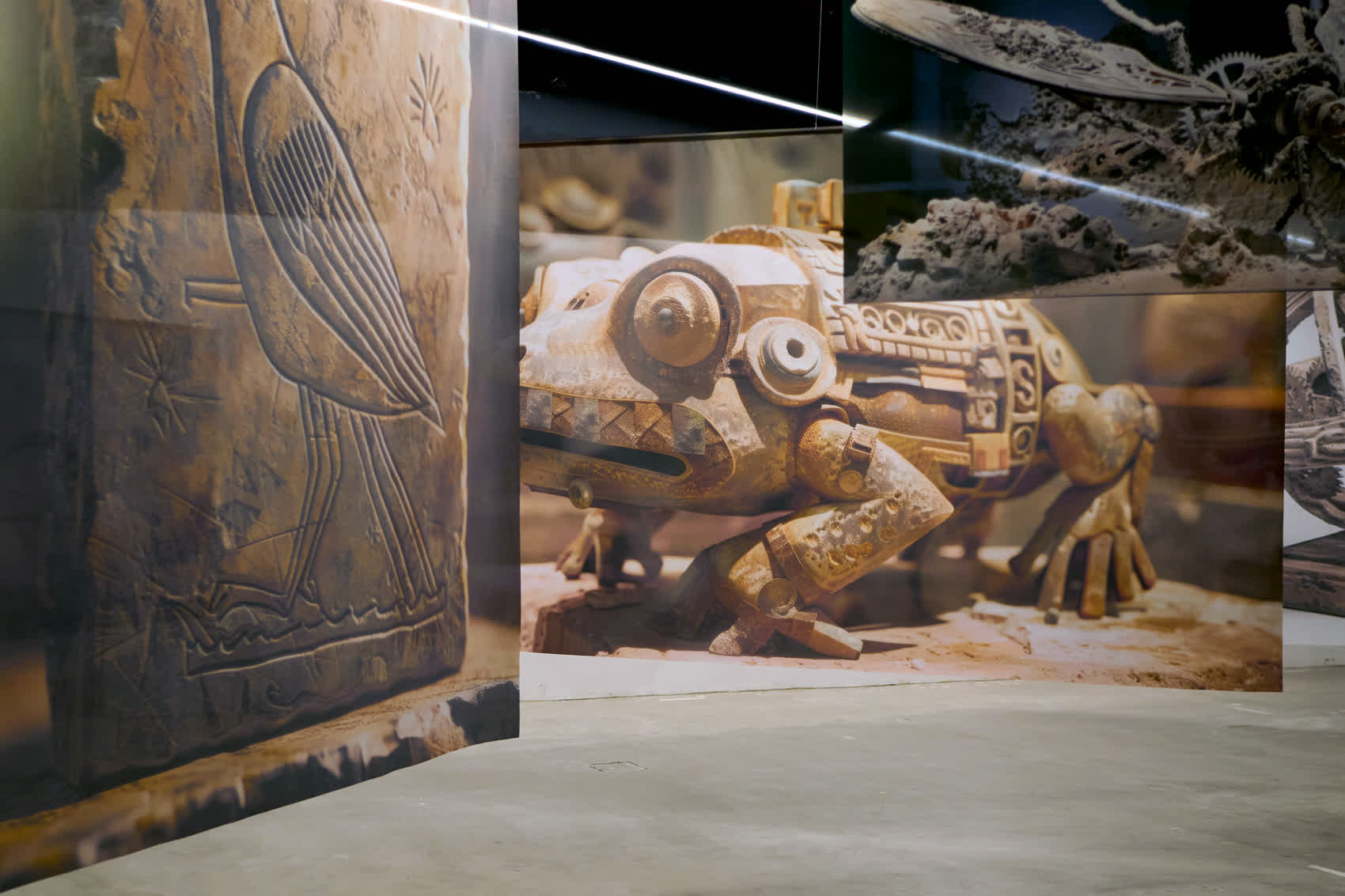
Photo provided by Noor Riyadh 2025: In the Blink of an Eye. Photo: Ishaq Madan

Photo provided by Noor Riyadh 2025: In the Blink of an Eye. Photo: Ishaq Madan
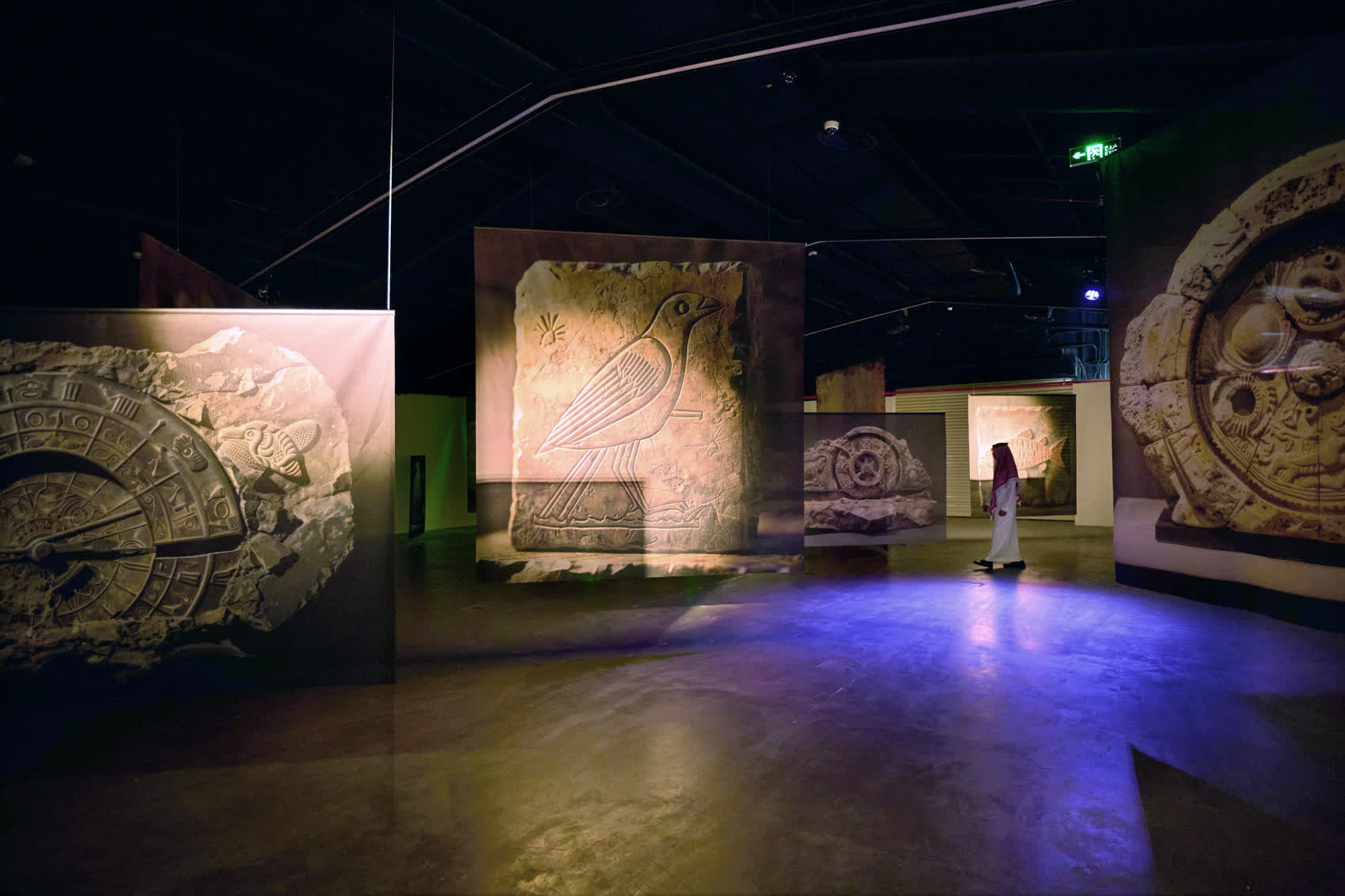
Photo provided by Noor Riyadh 2025: In the Blink of an Eye. Photo: Ishaq Madan

Photo provided by Noor Riyadh 2025: In the Blink of an Eye. Photo: Ishaq Madan

Photo provided by Noor Riyadh 2025: In the Blink of an Eye. Photo: Ishaq Madan
The Orchard of Vanishing Times
Spread across this gallery space are images related to ancient astrology, timekeeping devices, and navigation instruments. As we wander through this labyrinth of images, we contemplate how humanity imagined the structure of the cosmos and the cycles of seasons from observing the movements of the sun, moon, and stars, and how our consciousness of time has evolved through these observations.
In ancient Egypt, time and seasons were understood through observing the sun and stars. By observing the moment when Sirius, the brightest star in Canis Major, rose before dawn, the Egyptians predicted the timing of the Nile’s floods. This observation led them to discover the length of the solar year. Subsequently, the Julian calendar was introduced during Julius Caesar’s time, establishing leap years every four years. Pope Gregory XIII further refined this in 1582 with the Gregorian calendar, which reduced the frequency of leap years. Meanwhile, the lunar calendar, based on moon phases, was invented earlier in Mesopotamian civilization. In ancient China, calendars were created based on celestial observations, eventually adopting the lunisolar calendar. In Islamic regions, a purely lunar calendar is used. While globalization has established the Gregorian calendar as the international standard across all these traditions, regional and religious calendars continue to be used distinctly for religious rituals and seasonal festivals.
In The Orchard of Vanishing Times, we contemplate vanished calendars and lost time through images from ancient eras, generated with the help of AI following a meticulous prompting process developed after the artist conceived their own calendrical system.
ㅡ Mami Kataoka
————–
‹사라지는 시간들의 정원›
전시실에는 고대 점성술, 시간 계측 장치, 항해 도구와 관련된 이미지들이 펼쳐져 있다. 이 이미지의 미로 속을 거닐며 우리는 인류가 태양, 달, 별의 움직임을 관찰하며 우주의 구조와 계절의 순환을 어떻게 상상해 왔는지, 그리고 이러한 관찰을 통해 시간에 대한 의식이 어떻게 진화해 왔는지 성찰하게 된다.
고대 이집트에서 시간과 계절은 태양과 별의 관찰을 통해 이해되었다. 큰개자리에서 가장 밝은 별인 시리우스가 동트기 전 떠오르는 순간을 관측함으로써 이집트인들은 나일강의 범람 시기를 예측할 수 있었다. 이 관찰은 태양년의 길이를 발견하는 계기가 되었고, 이후 율리우스 카이사르 시대에 율리우스력이 도입되면서 4년마다 윤년이 설정되었다. 이어 1582년 교황 그레고리오 13세가 이를 한 차례 더 다듬어 윤년의 빈도를 줄인 그레고리력을 정립했다.
한편, 달의 위상을 기반으로 한 음력은 메소포타미아 문명에서 더 일찍 발명되었다. 고대 중국에서는 천문 관측을 바탕으로 역법이 만들어졌고, 이후 태음태양력을 채택했다. 이슬람권에서는 순태음력이 사용된다. 세계화로 그레고리력이 이 모든 전통을 아우르는 국제 표준으로 자리 잡았지만, 각 지역과 종교의 달력은 종교적 의례와 계절 축제를 위해 여전히 고유의 영역에서 쓰이고 있다.
‹사라지는 시간들의 정원›에서 우리는 고대의 이미지들을 통해 사라진 달력과 상실된 시간을 되새기게 된다. 이 이미지들은 작가가 독자적인 역법 체계를 고안한 뒤, 세밀한 프롬프팅 과정을 거쳐 AI의 도움을 받아 생성한 것이다.
-마미 카타오카